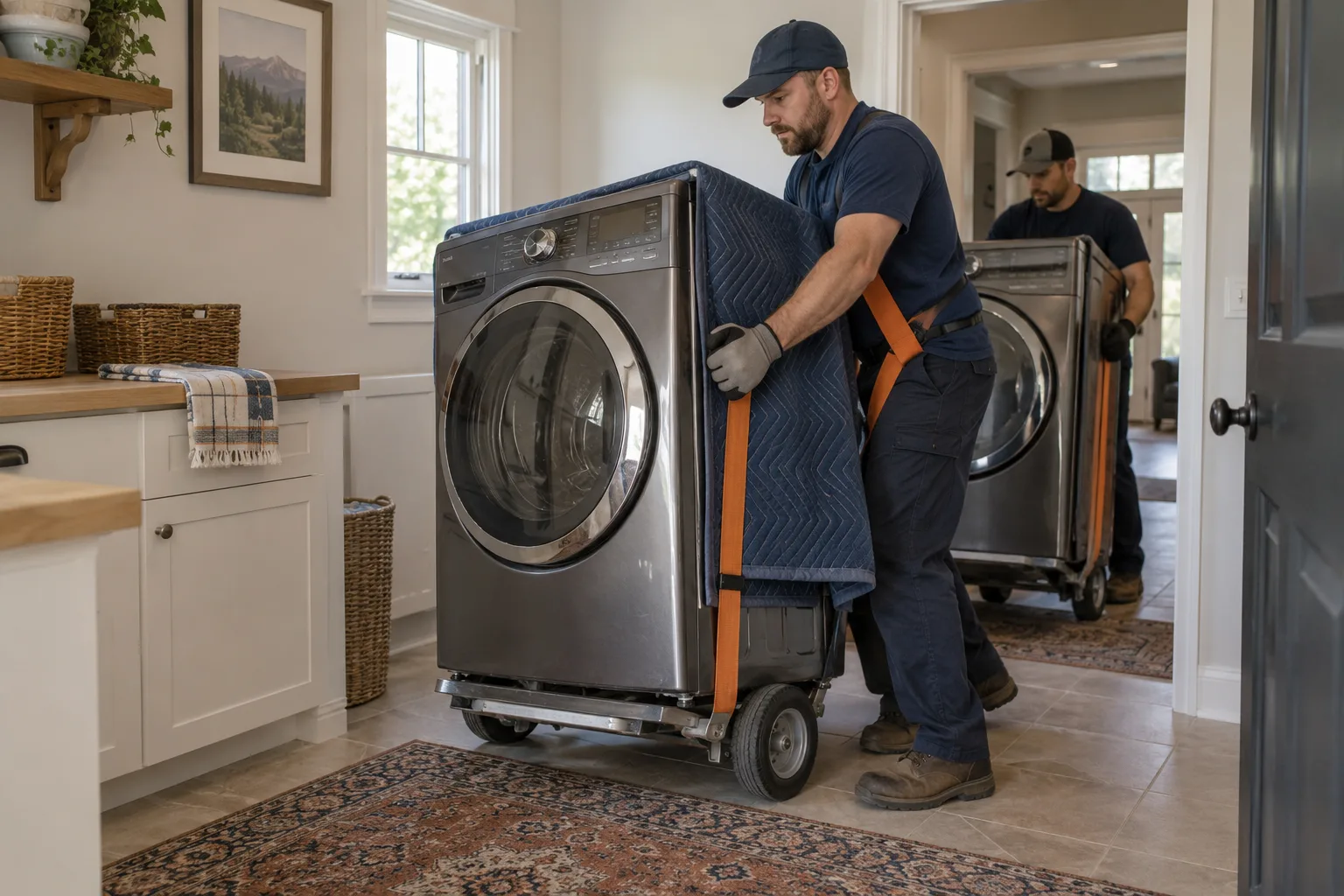
Washers connect to hot and cold water, a drain, and power. Dryers may use electricity or gas plus a vent. Arrange for every utility connection to be safely shut off and disconnected before the removal appointment.
Confirm disconnection first
If a valve is corroded, a hose is stuck, or a gas connection is involved, stop and use an appropriate qualified professional. Removal crews should not discover an active connection after the machine is already pulled forward.
Clear the route, not the whole room
Empty the machines and remove detergent, baskets, rugs, and shelves that project into the carry path. Measure the laundry-room door, hall turns, and exterior exit. Protect pets and keep children away from the work area.
For stacked units, share the brand, approximate dimensions, and whether the machines are attached with a stacking kit. A stacked pair may need a different crew plan than two freestanding machines.
Look for hidden access problems
Check whether the machines sit in a drain pan, behind bi-fold doors, on a pedestal, or below overhead cabinets. Photograph the back connections and the full route if you can do so without moving the appliance.
Mention stairs, soft flooring, tight corners, and long carries when you request an estimate. Those details affect time and equipment more than the age of the machine.
Pickup-readiness checklist
- Utilities safely disconnected
- Drum and dryer empty
- Detergent and rugs removed
- Doorways and turns measured
- Stacking kit or pedestal disclosed
Next step
Use the checklist to gather the job details, then review the companion washer & dryer removal service page. Call only after utility and installation questions are settled.
Sources and scope
Local appliance examples and disposal context were checked against the City of Asheville’s appliance guidance, the client’s published service list, and current local service results on October 1, 2026. Donation acceptance should always be confirmed directly with the receiving organization.